

Maternal Fetal Medicine

In addition to genetic counseling, our maternal-fetal medicine specialists provide ultrasound and other prenatal diagnostic and fetal surgical procedures to monitor and manage low- to high-risk pregnancies.
Providing personal and attentive care in a state-of-the-art setting
Prenatal Testing
Perinatologists in the Maternal-Fetal Medicine Clinic at Valley Medical Center have 2-3 years additional, specialized obstetrics/gynecology training focused on the assessment and management of high-risk pregnancies.
Pregnancy can be an exciting and confusing time. Before choosing any prenatal tests, you should discuss this information with your provider and/or genetic counselor. By doing so, you will obtain the information you need to make the best decisions for you and your baby.
Why Consider Prenatal Testing?
Most babies are born healthy, but all pregnant women have a 3 to 5 percent chance of having a baby with a birth defect or mental retardation. For parents who are concerned about these risks, prenatal testing can help detect some problems. Your test results can reassure you that your baby is healthy, help you prepare for a baby with special needs or alert you if a serious problem is detected.
| Prenatal Genetic Testing: Making an Informed Decision 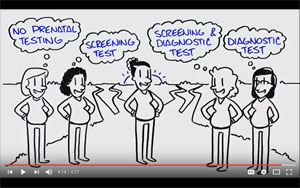 View this informative video series (Courtesy of the Department of Health) Should You Consider Genetic Carrier Screening? Current medical guidelines recommend offering genetic carrier screening to all couples who are pregnant or those considering pregnancy. Learn more. Prueba de detección de portador genético. Should You Consider Genetic Counseling? If you're concerned about inherited health risks or don't know your family health history, genetic counseling may be helpful. |
Diagnostic Tests
CVS: Chorionic villus sampling involves removing a small amount of tissue from the placenta between weeks 11 and 13. The doctor removes this tissue either by going through the mother’s abdomen with a thin needle, or through the vagina with a thin tube. UItrasound is used to help guide the doctor during the procedure
Amniocentesis: Amniocentesis involves removing a small amount of amniotic fluid (water that surrounds the baby). The doctor uses ultrasound to help guide a thin needle through the mother’s abdomen to get this fluid. This test is done any time after 16 weeks.
Fetal echocardiogram, also known as cardiac ultrasound, is used to look at the heart of a fetus as it works. This test is read by cardiologists who specialize in diagnosing fetal heart defects. It's a simple, painless procedure done in the same way that ultrasound pictures are taken of a fetus in a pregnant woman’s womb. Click here for the Fetal Echo Referral Form.
What Kinds of Screening Tests are Available?
During your pregnancy, you can choose a prenatal screening and/ or diagnostic test. A screening test shows if a pregnancy may be at risk for certain conditions (like Down syndrome), but cannot actually diagnose them. Most screening tests require a blood draw. Some also use a nuchal translucency (NT) ultrasound to measure the fluid at the back of the baby’s neck. Screening tests do not increase the risk for miscarriage. Information from screening tests can be used to decide whether to have a diagnostic test such as chorionic villus sampling (CVS) or amniocentesis. A prenatal diagnostic test is used to diagnose certain conditions such as Down syndrome during pregnancy. Diagnostic tests are offered to women who have had a positive screening test, are over 34 years old, have had a previous pregnancy or child with a genetic condition, or who have a family or personal history of a genetic condition. Prenatal diagnostic tests involve a small risk of miscarriage.
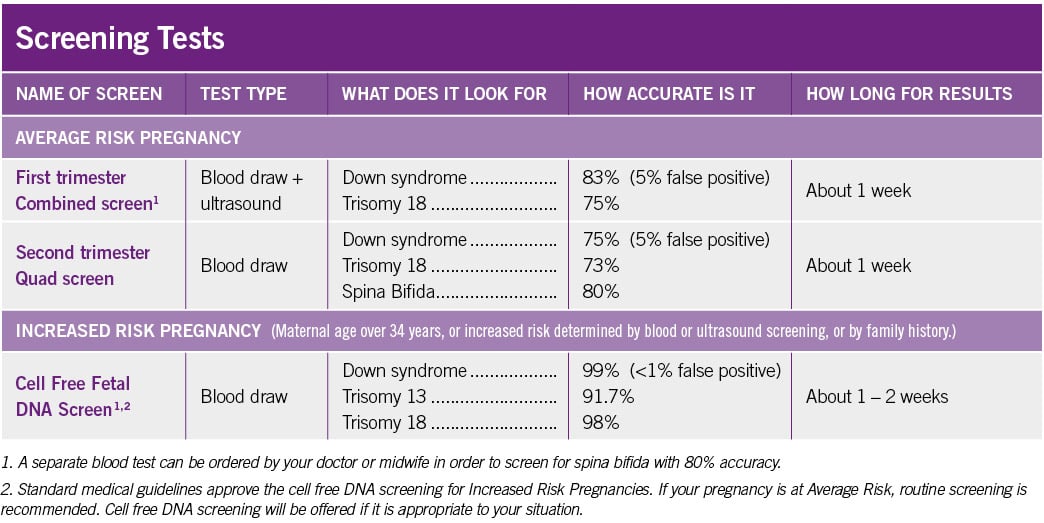
What if my Prenatal Screen is Positive?
REMEMBER: A screening test only estimates the chance for certain problems. A positive screen does not mean there is definitely a problem with the baby. If your screening test is positive, you can talk to a genetic counselor about the results. A genetic counselor can help you understand the results and work with you to decide if you should have a prenatal diagnostic test.
Frequently Asked Questions
Are these procedures safe?
Maternal fetal medicine doctors are specialists who have many years of experience with high-risk pregnancies and special procedures. The most recent studies suggest that the risk for complications and miscarriage after CVS or amniocentesis is very low with experienced providers such as ours.
Will my activities be restricted following my procedure?
After your procedure, you can do most normal activities, including walking and driving. For the next 24 hours, you should not lift anything heavier than 10 pounds, participate in strenuous activity or exercise, or have sexual intercourse.
When do I receive results?
Results are usually ready in about 2 weeks. A genetic counselor will call you to discuss the results as soon as they are available. Your doctor/midwife will also receive a notice about your results.
Will a normal test guarantee a normal baby?
No. Both CVS and amniocentesis will identify chromosome conditions such as Down syndrome and are sometimes used to test for other genetic conditions. However, these tests do not detect every genetic condition or birth defect.
How can I learn more about my options?
You can learn more about your options by talking to your doctor/midwife or by calling our schedulers at our Maternal Fetal Medicine Clinic to set up an appointment with a genetic counselor. They are available Monday through Friday.
Will my insurance cover my prenatal screening tests?
Insurers typically take standard medical guidelines into consideration when determining coverage for testing. Coverage of routine screening tests and Cell Free DNA screening typically depends upon an individual patient’s risk factors (age, family history, blood and ultrasound screening results). If you have questions about your own plan, coverage and out of pocket costs, we recommend you speak with your insurer.
Forms & Flyers
Click here to download our Prenatal Testing flyer. Pruebas Prenatales (Español)
For providers: Maternal Fetal Medicine referral form Fetal Echo referral form
Service Location
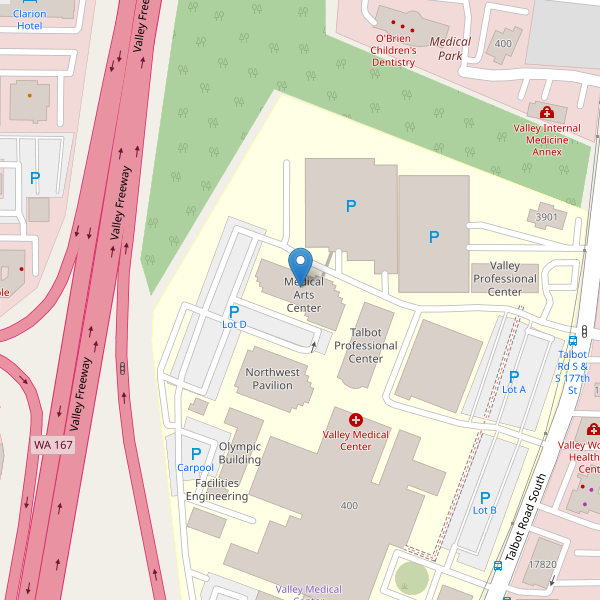
Maternal Fetal Medicine | VMC Specialty Care

 Call 425.690.3477
 Fax 425.690.9477

 Classes & Events
 Health Blog